
Raising kids in Canada as a Filipino immigrant is like juggling lechon and poutine. You want to keep the flavors of home alive while they’re gobbling up Tim Hortons. With over 900,000 Filipinos in Canada by 2025, parents are on a mission to pass down bayanihan (community spirit), paggalang (respect), and a love for adobo to kids who’d rather FaceTime than mano po. It’s a balancing act, but Pinoys make it work with heart and hustle. Let’s dive into the how, what, when, where, and why of keeping Filipino traditions thriving. Because even in snow boots, these kids are still kababayan.
Why Traditions Matter
In the Philippines, traditions are the glue. Family dinners, fiesta dances, and Sunday mass shape who you are. In Canada, where independence and hockey rule, those roots can feel like they’re slipping. For Filipino parents, part of the 500,000 new permanent residents by 2025, it’s about identity. They want kids to know utang na loob (gratitude), speak a little Tagalog, and not blink at dinuguan (blood stew). It’s not just nostalgia. It’s a lifeline to heritage in a place where “Pinoy” might get lost in the multicultural mix.
What Traditions Are We Talking About?
Here’s what’s on the table:
- Food: Lumpia, sinigang, kare kare. Meals that scream home, not Kraft Dinner.
- Respect: Mano po (hand to forehead blessing) and calling adults “Tita” or “Tito,” not “Karen.”
- Faith: Sunday mass, Simbang Gabi (Christmas dawn masses), and little altars with Santo Niño.
- Fun: Karaoke nights (My Way on repeat) and fiesta vibes. Think tinikling or pabitin.
- Language: Tagalog or Bisaya basics. “Salamat” (thank you), “Mahal kita” (I love you), even if it’s rusty.
These aren’t museum pieces. They’re living, breathing Pinoy pride.
How Do Parents Pull It Off?
Filipinos don’t mess around. They weave traditions into daily life:
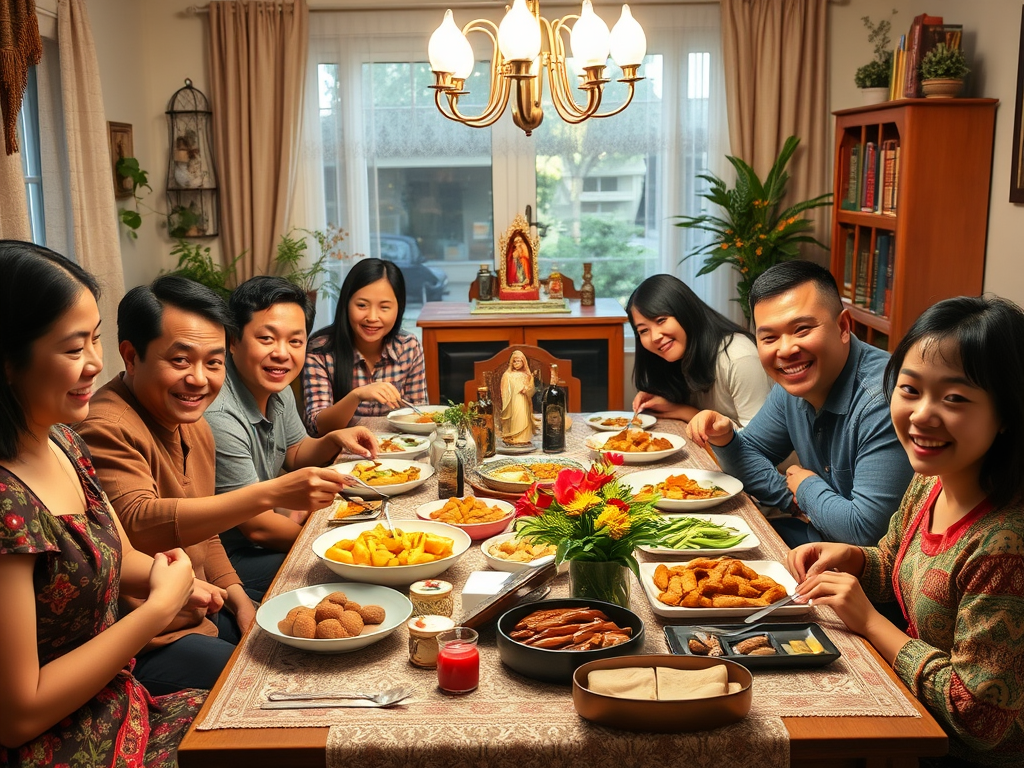
- Cook Like Crazy: Sunday salu salo (feast). Adobo simmering while kids sneak puto. No shortcuts. It’s Lola’s recipe or bust.
- Teach by Doing: Mano po before bed, or “Tita Linda” for the neighbor. Kids learn respect hands on.
- Church It Up: Mass isn’t optional. Simbang Gabi means early mornings and bibingka bribes.
- Party Pinoy: Fiestas at home. Karaoke blaring, pandanggo lessons in the basement.
- Speak It: Tagalog bedtime stories or “Kumusta ka?” (How are you?) at dinner. Slowly, it sticks.
Take Ana in Toronto. Her teens roll eyes at mano po, but she’s got them frying lumpia and singing Ang Pasko Ay Sumapit by December. It’s sneaky persistence. Pinoy 101 disguised as family time.
When Does It Happen?
Timing’s key:
- Daily Doses: Dinner’s sinigang night, not pizza. Tradition’s baked in.
- Holidays: Simbang Gabi (December), Independence Day (June 12), or Flores de Mayo (May). Big moments to flex Pinoy roots.
- Milestones: First communions or birthdays get a lechon and a Tagalog toast.
- February 27, 2025: Post winter blues, a mini fiesta. Tsokolate and pandesal keep spirits up.
It’s not forced. It’s woven into the rhythm.
Where Does It Play Out?
Traditions shine in Pinoy hubs and homes:
- Toronto (Scarborough): St. Boniface Church for Simbang Gabi, kitchens pumping out kakanin.
- Vancouver (Surrey): Kalayaan Centre’s fiestas, or rainy day karaoke in basements.
- Winnipeg: St. Edward’s mass or PCCM’s cultural nights. Prairie kids learn tinikling.
- Everywhere Else: Rural Alberta or BC. Backyards host salu salo, passing down malasakit (care).
Even online, Zoom calls with Lolo in Manila keep the Tagalog flowing.
Why Keep It Going?
It’s a mix of heart and stakes:
- Identity: Kids born here might never see Pinas. Traditions say, “You’re Pinoy too.”
- Roots: Utang na loob and bayanihan teach values Canada’s “me first” vibe might skip.
- Family: 62% of Filipinos join community groups (2020 stats). Traditions glue us together.
- Future: With 85% of early migrants educated (StatsCan), passing culture’s a legacy, not a chore.
It’s why Ana’s teens know paggalang. They’ll carry it forward, eh?
Funny Moments Along the Way
- Food Fumbles: “Ma, why’s there blood in my stew?” Dinuguan meets a Canadian “eww.”
- Karaoke Clash: Kids pick Drake, Lola demands Dahil Sa’yo. Mic tug of war ensues.
- Mano Mishap: Teen tries mano po on a teacher. “Uh, fist bump instead?” Awkward giggles.
Laughter’s the secret sauce. Keeps it light.
Wrapping It Up
Maintaining Filipino traditions while raising kids in Canada is a dance. Adobo meets mac and cheese, mano po bumps into high fives. Parents cook, pray, and sing their way through, blending Pinoy soul with Canadian snow. It’s not perfect. Kids might ditch Tagalog for “eh”. But it’s real. From Scarborough to Surrey, traditions stick because they’re family, not fossils. So, fry that lumpia, cue the karaoke. Your kids’ll thank you one day, salamat and all.
References
- Statistics Canada. Filipino population and community trends (2016 to 2025 projections).
- Immigration, Refugees and Citizenship Canada (IRCC). Cultural retention insights.
- World Bank. Remittance context (2023 figures).
- Pinoy Life Blogs. Parenting anecdotes (e.g., “Pinoy in Canada” forums).
- Cultural Studies. Traditions like bayanihan, Simbang Gabi (general knowledge).
 Pinoy Life In Canada Blog
Leave a comment